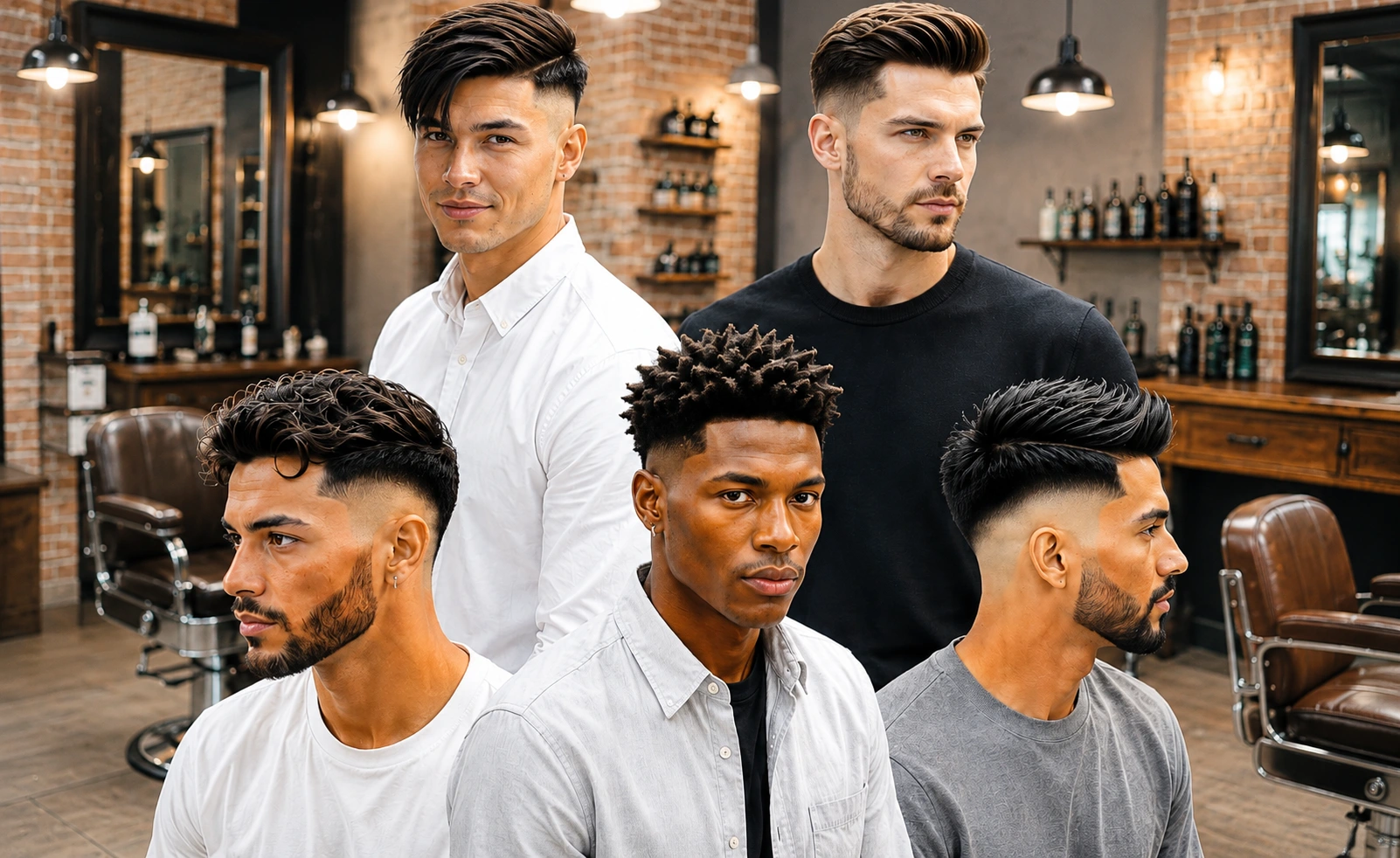
Fades come in more shapes than most people realize. Once you go beyond the basics, the types of fade haircut styles branch out into dozens of variations, each with its own look and attitude. This guide covers them all, from the most requested cuts to the lesser-known styles worth trying.
If you already know what a fade is, this is where the real decision-making begins: which type fits your face, your hair, and your lifestyle.
▶ Fade Types by Height
Height is the first thing that separates one fade from another. It decides how bold or subtle the cut looks.
▸Low Fade
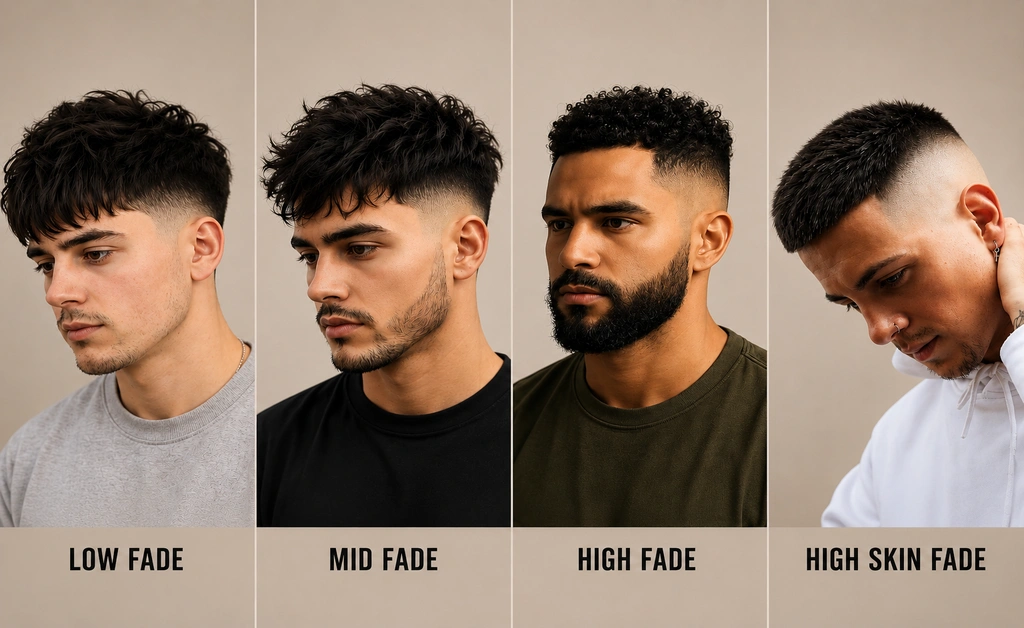
A low fade starts just above the ear. It is the softest of all fade haircuts, with a gentle blend that keeps things clean without much contrast. This is one of the most common men’s haircuts fades because it works in almost any setting, from the office to a night out. It also grows out gracefully, so you don’t need to rush back to the chair every week.
▸Mid Fade
The mid fade starts around the temple, right between low and high. It gives noticeably more contrast than a low fade while staying easy to wear. This is often called the most balanced of all fade haircuts because it flatters a wide range of face shapes and pairs well with almost any top style.
▸High Fade
A high fade top starts near the crown, leaving very little length on the sides. This creates the sharpest contrast of the three height-based fades. It puts full attention on the top section, making it a strong choice for anyone with thick or voluminous hair they want to show off.
▸High Skin Fade Haircut
A high skin fade haircut takes the high fade and pushes it all the way to bare skin. It is one of the boldest types of fade haircut styles available, offering maximum contrast and a razor-sharp finish. This style is especially popular as a black mens haircut fade, since it pairs beautifully with tighter curl patterns on top.
If you’re still deciding whether a fade is the right choice, start with our complete guide to men’s haircuts. It compares today’s most popular haircut styles, explains who they suit best, and makes it easier to choose the perfect cut before narrowing it down to a specific fade type.
▶ Fade Types by Shape
Beyond height, the shape of the fade line changes the entire character of the cut.
▸Skin Fade (Bald Fade)
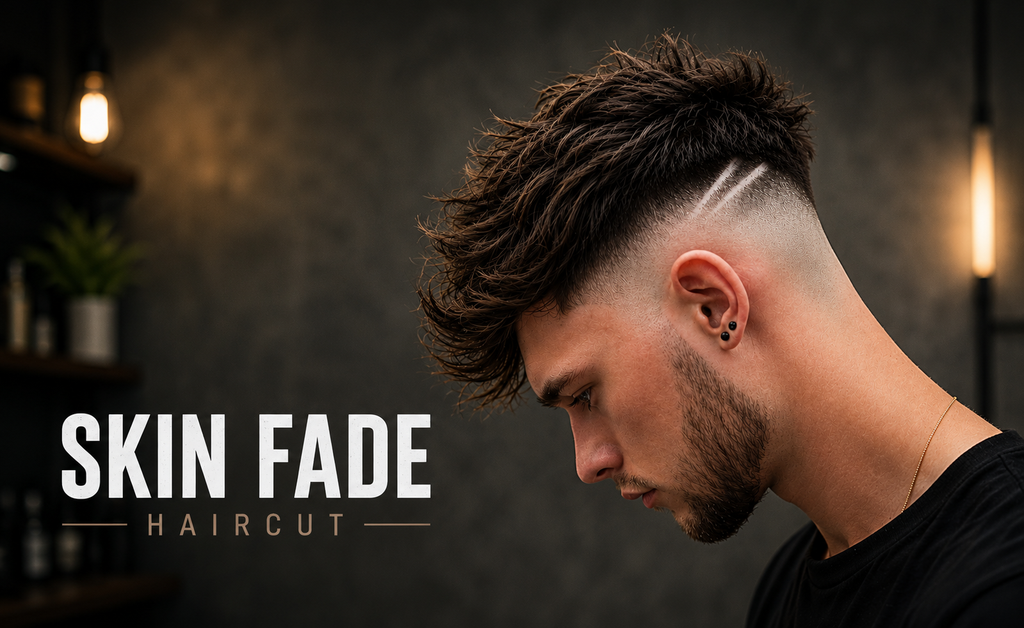
A skin fade tapers hair all the way down to the skin rather than stopping at a short guard length. It can start low, mid, or high, so the “skin” part only describes how short it goes at the bottom, not where it begins. It is the cleanest and most dramatic of all fades.
▸Drop Fade
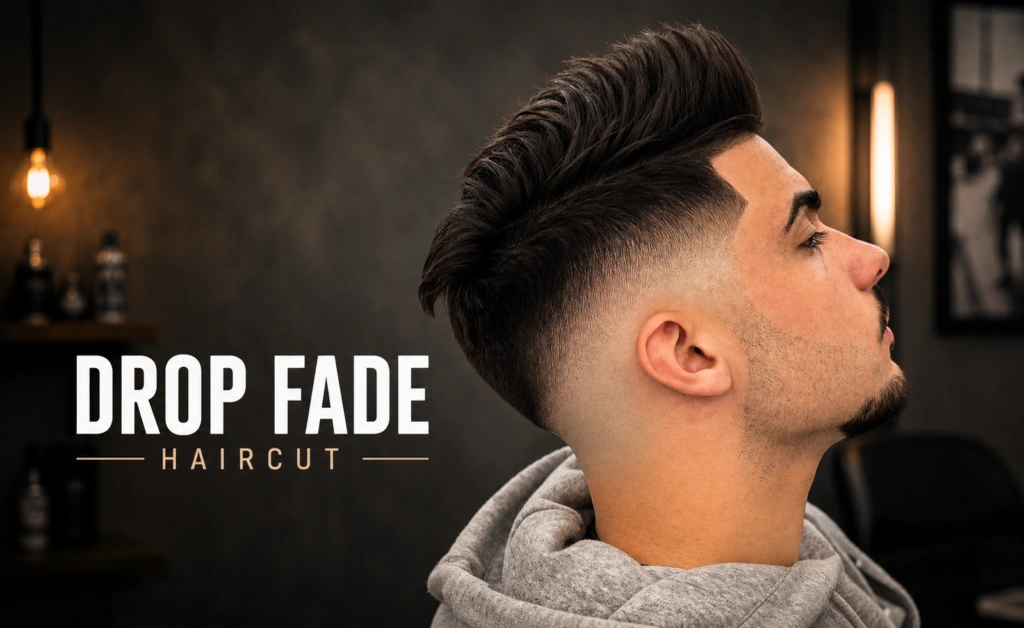
A dropped fade haircut curves downward behind the ear instead of running in a straight line. This follows the natural curve of the skull, giving the cut a rounder, more organic look. It works especially well with longer top hair styled backward or to the side.
▸Burst Fade
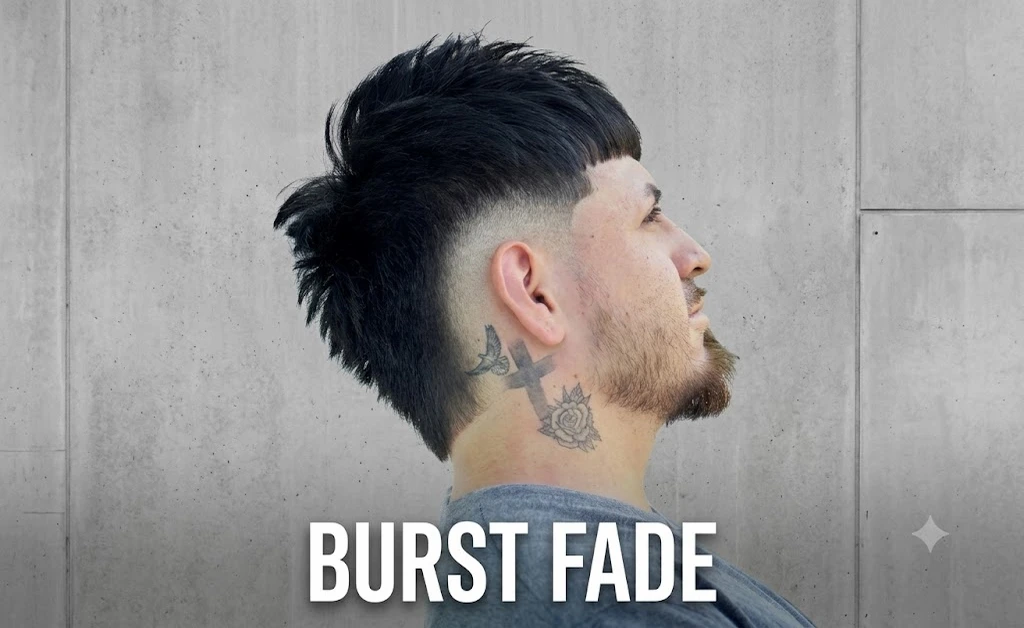
A burst fade wraps around the ear in a half-circle, fading outward while leaving the neckline longer. It creates a distinctive frame around the ear and pairs naturally with mohawks and faux hawks. Among creative fade Haircuts, this one stands out for its unique shape.
▸Temple Fade
A temple fade is a smaller, more compact fade that focuses only on the temple area rather than tapering the entire side. It is subtle and often used as an accent alongside longer hair, giving definition without a full fade commitment.
▸All Around Fade
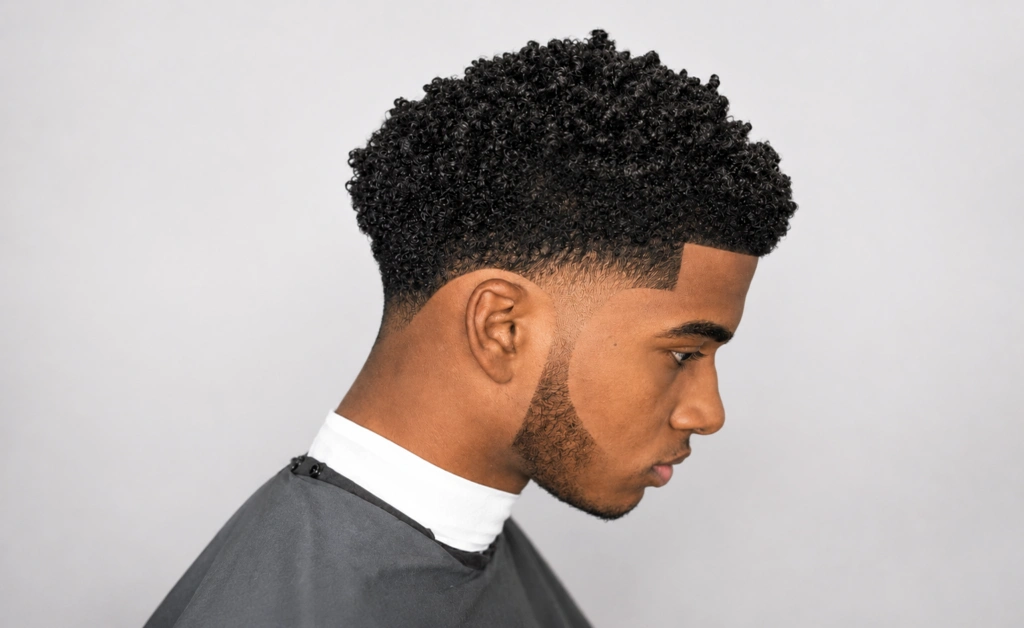
An all around fade tapers evenly on every side, including the front, back, and sides, rather than fading only at the temples and neckline. This creates a fully uniform look from every angle and is popular with shorter overall haircuts.
▸Taper Fade
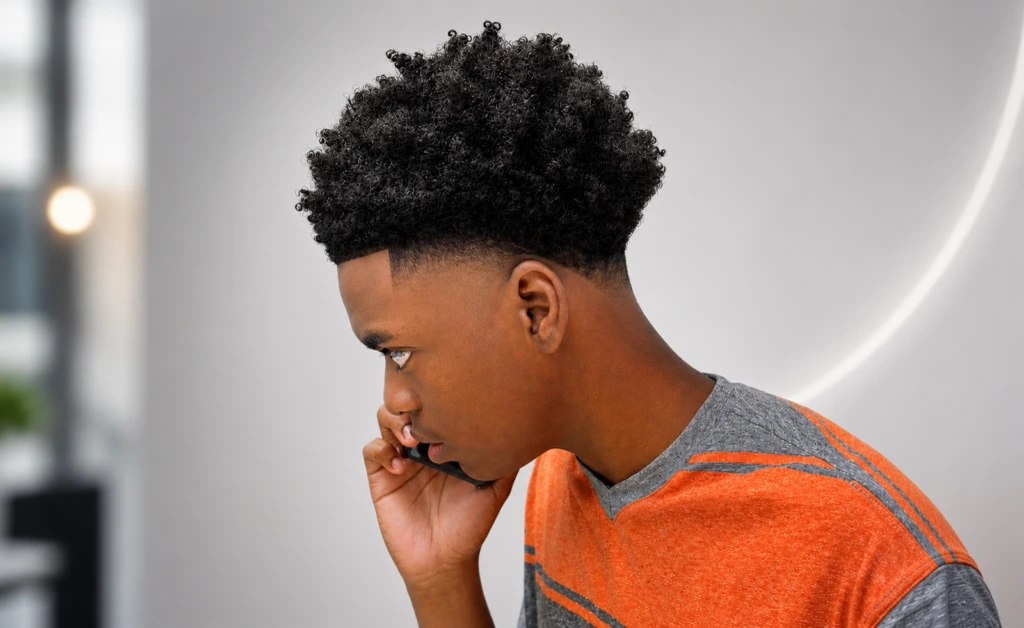
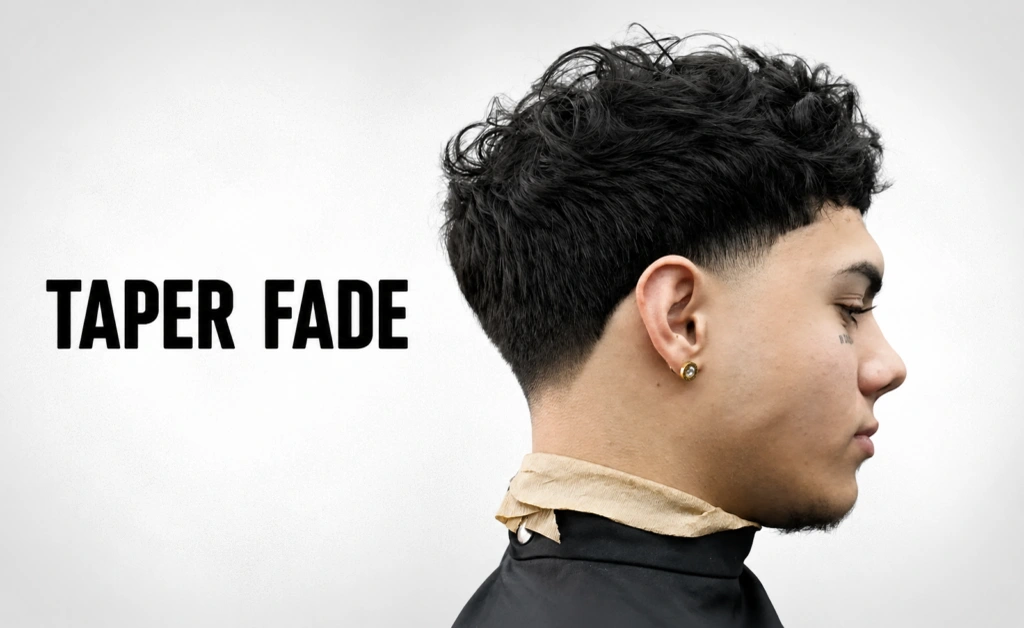
A taper fade is the gentlest type in the entire fade family. It shortens hair gradually but rarely reaches skin. This makes it a favorite among mature men and traditional workplaces, offering the shape of a fade with a much softer finish.
▶ Fade Types by Top Style
Some fade haircuts are defined less by the sides and more by what happens on top.
▸High Top Fade
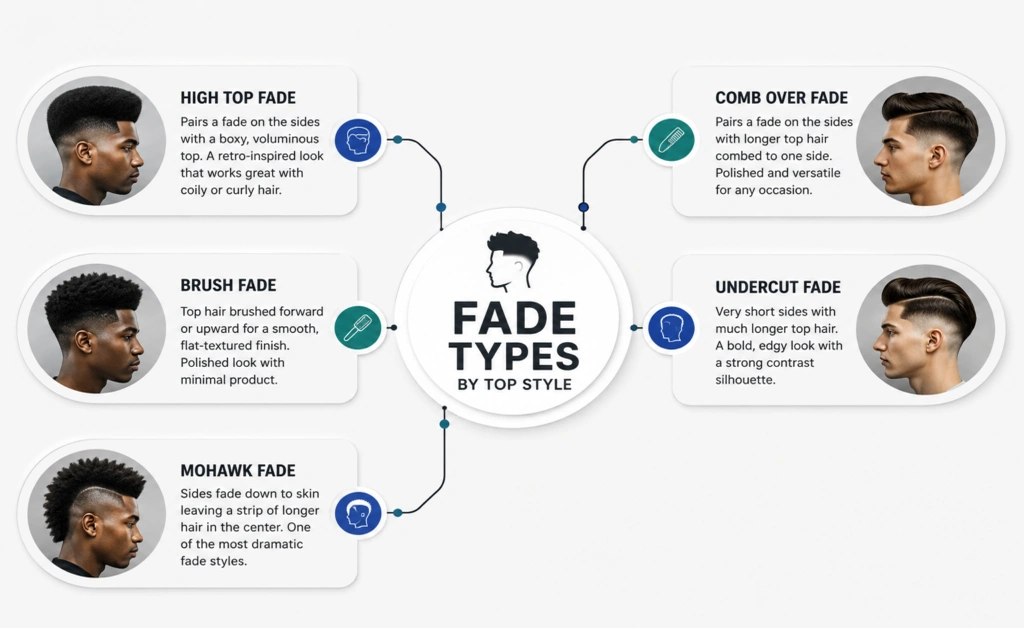
A high top fade pairs a fade on the sides with a boxy, voluminous top, often flat across the crown. It is a bold, retro-inspired look that has made a strong comeback and works especially well with coily or curly hair.
▸Brush Fade
A brush fade combines a classic fade with top hair brushed forward or upward using a boar-bristle brush during blow-drying. The result is a smooth, flat-textured finish that looks polished without heavy product. It’s one of the more low-key yet stylish fade cuts for everyday wear.
▸Mohawk Fade
A mohawk fade tapers the sides down to skin while leaving a strip of longer hair down the center. It is one of the most dramatic types of fade haircut styles, often paired with a burst or high fade for extra impact.
▸Comb Over Fade
A comb over fade pairs a fade on the sides with longer top hair combed to one side. It is polished and versatile, working equally well for formal occasions and casual days.
▸Undercut Fade
An undercut fade uses a very short, almost shaved section on the sides that contrasts sharply with much longer hair on top. It is bolder than a standard fade and gives a strong, edgy silhouette.
▶ Choosing Between Fade Types
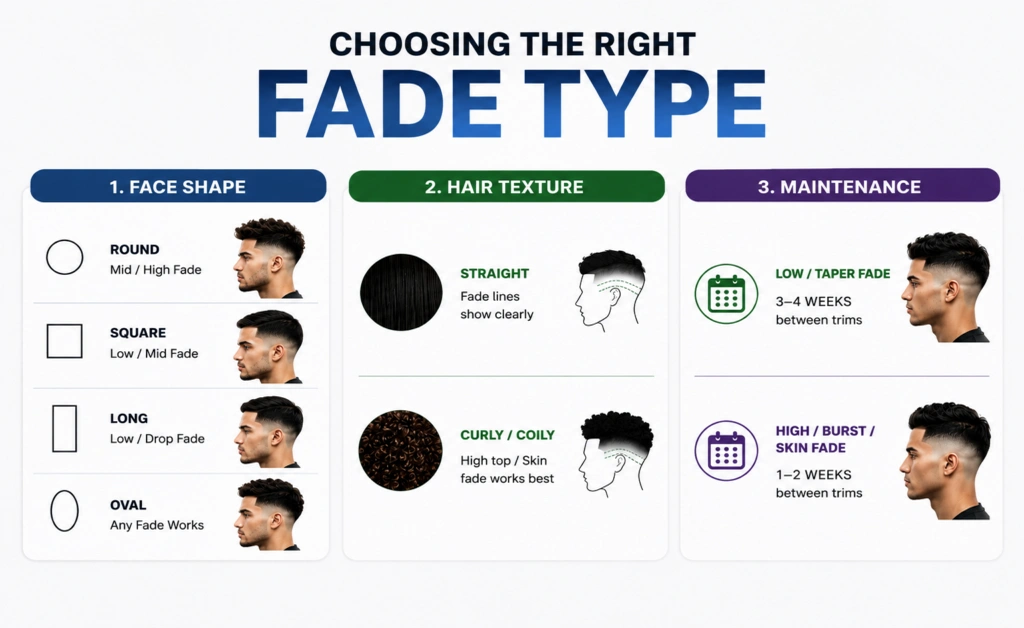
With so many types of fade haircuts available, narrowing down the right one comes down to three things: face shape, hair texture, and maintenance.
- Round face: mid or high fades add visual height.
- Square face: low to mid fades complement strong jawlines.
- Long face: low fades or drop fades avoid adding extra length.
- Oval face: nearly every fade cut works well here.
For hair type, straight hair shows fade lines the most clearly, so precision matters. Curly and coily hair, common in many black mens haircut fade looks, pair naturally with high top fades and skin fades, letting the top texture stand out.
Maintenance also plays a role in low fade vs high fade decisions. Low fades and taper fades can go three to four weeks between trims. High fades, burst fades, and skin fades need attention every one to two weeks to stay sharp.
▶ Frequently Asked Questions
1. What is the most popular type of fade haircut?
The mid fade is often considered the most popular among all fade haircuts because it balances contrast and versatility, working well for most face shapes and hair types.
2. What is the difference between a low fade vs high fade?
A low fade starts just above the ear with a soft contrast, while a high fade starts near the crown with a much sharper, bolder look. High fades also need more frequent trims.
3. Which fade type works best for curly hair?
High top fades and skin fades tend to work best with curly or coily hair, since they let the natural texture and volume on top stand out against a clean, tapered side.
4. Is a burst fade different from a drop fade?
Yes. A burst fade curves around the ear in a half-circle, leaving the neckline longer. A drop fade curves downward behind the ear, following the natural shape of the head.
▶ Final Thoughts
There is no shortage of options once you start exploring the full range of types of fade haircut styles. From a subtle low fade to a bold mohawk fade, each style offers a different way to express personal style through a single haircut. The best approach is to match the fade to your face shape, hair texture, and how much upkeep you’re willing to put in.
Until next time, stay sharp — Style Sola.