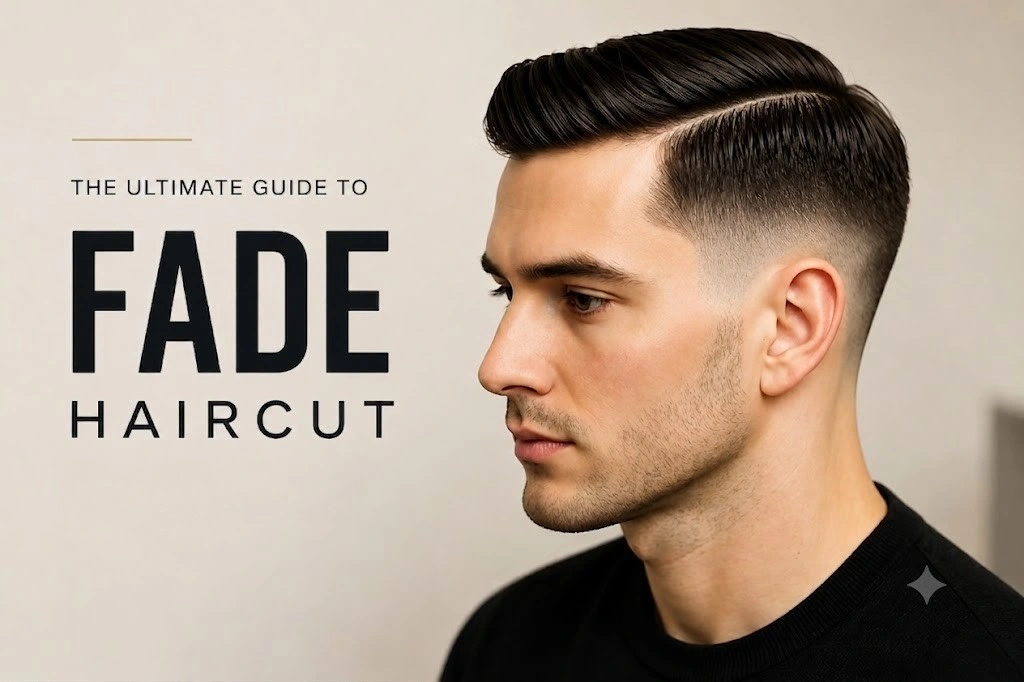
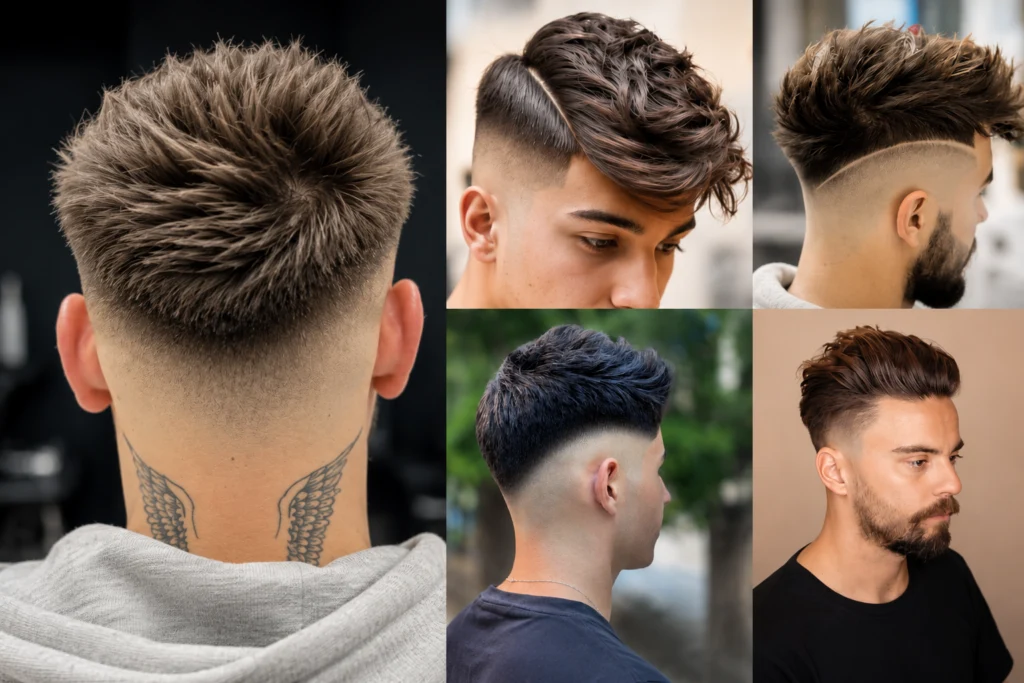
A fade haircut blends longer hair on top into shorter sides, creating a smooth transition that tapers down to the skin or a close crop. There are no harsh lines—just a clean, seamless finish that gives the haircut its signature polished look.
But the cut itself is only part of what makes a fade look great. Even a perfectly executed fade can look average if it doesn’t suit your face shape, hair type, or personal style. When everything works together, though, a fade becomes one of the easiest ways to look sharp with minimal effort.
This guide goes beyond what happens once the clippers stop. You’ll learn how to choose the right fade, style it, match it to your personal look, communicate clearly with your barber, and avoid the small mistakes that quietly ruin an otherwise great cut. Simple words. Clear steps. No fluff.

» Why Every Fashion Guy Needs A Fade Haircut
A fade blends longer hair on top into shorter hair on the sides. There is no harsh line. Just a smooth, gradual drop. That is what makes it look expensive, even when it costs very little.
Think about the men on your favorite mood boards. Clean sides. Sharp top. That polished look almost always comes from mens fade styling done right. It is low maintenance in theory, but it needs regular touch-ups to stay sharp. That trade-off is worth it. A fresh fade instantly makes an outfit look more intentional.
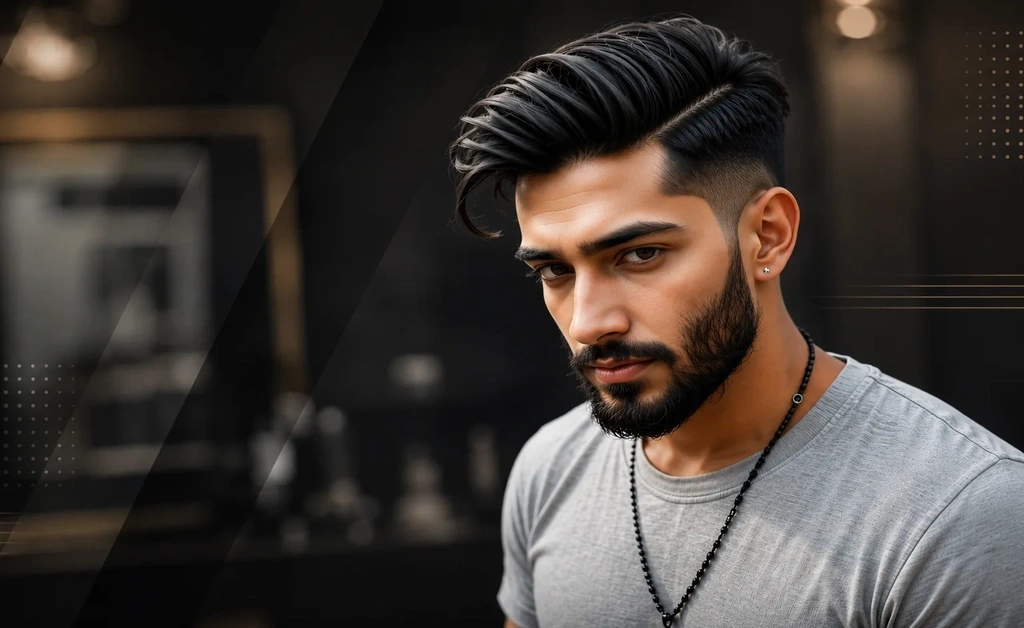
Fashion enthusiasts love it for one more reason. It is a blank canvas. You can pair it with curls, waves, a pompadour, or a simple comb-over. The fade does the hard work. Your top style gets to be the star.
» Different Fade Types At A Glance
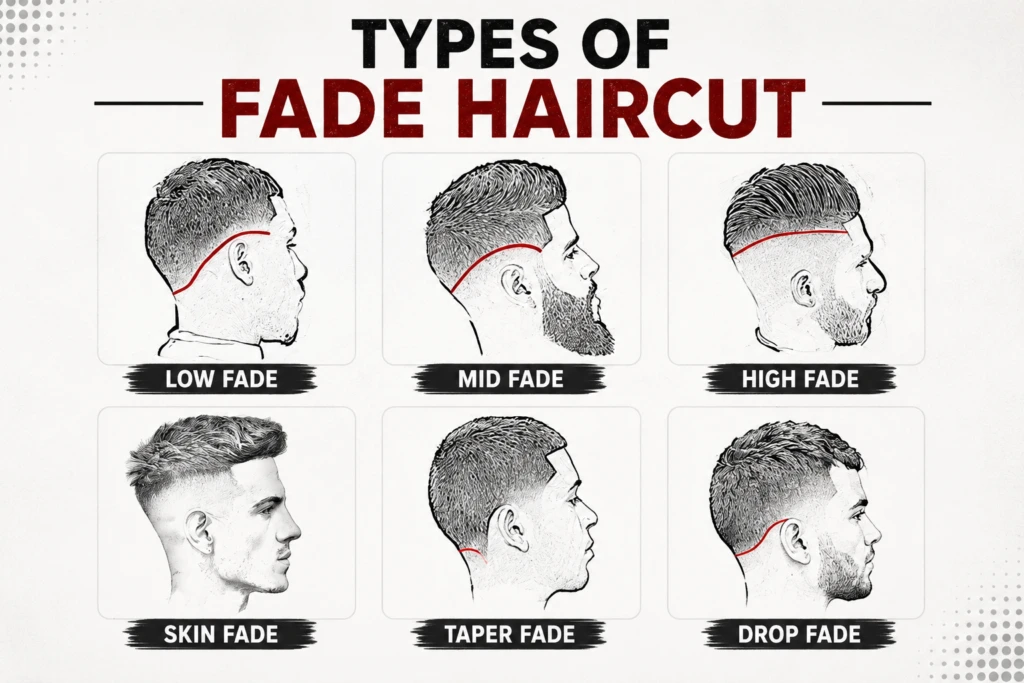
Not all fades are the same. The height and finish of the blend change the whole vibe, and there are more options than most guys realize: the low fade, mid fade, high fade, skin fade, taper fade, and drop fade.
Each one sits differently on the head and suits a different face shape, hair texture, and personal style. We go deep on every single one, with photos and barber tips, in our full breakdown of different types of fade haircut ave that guide before your next appointment. For now, let’s look at the fade from angles most articles skip.
» The Fade In Fashion, Then And Now
Fade haircut is not a new idea. It has roots in military grooming, then moved through hip hop culture in the 80s and 90s, and later became a runway and red carpet regular. What changed is the context. Today it is not just a “clean cut.” It is treated as a real style choice, styled with the same care as an outfit.
That shift matters. Stylists now pair a fade with tailoring, streetwear, and even eveningwear. It reads as intentional, not just tidy. This is why the fade has stayed relevant season after season, while other trends fade in and out.
» Fade Looks For Different Occasions
A fade does not have to look the same every day. The styling around it can shift with the occasion.
For work, keep it simple. A low fade with a side part or slick back reads professional and polished. For a night out, add texture and a bit of shine with a matte paste or light pomade. For the gym or travel days, skip product entirely and let the natural texture show. Low maintenance, still sharp.
This flexibility is part of what makes the fade one of the most versatile men’s haircuts for fashion-forward men. One haircut, several looks, depending on the day.
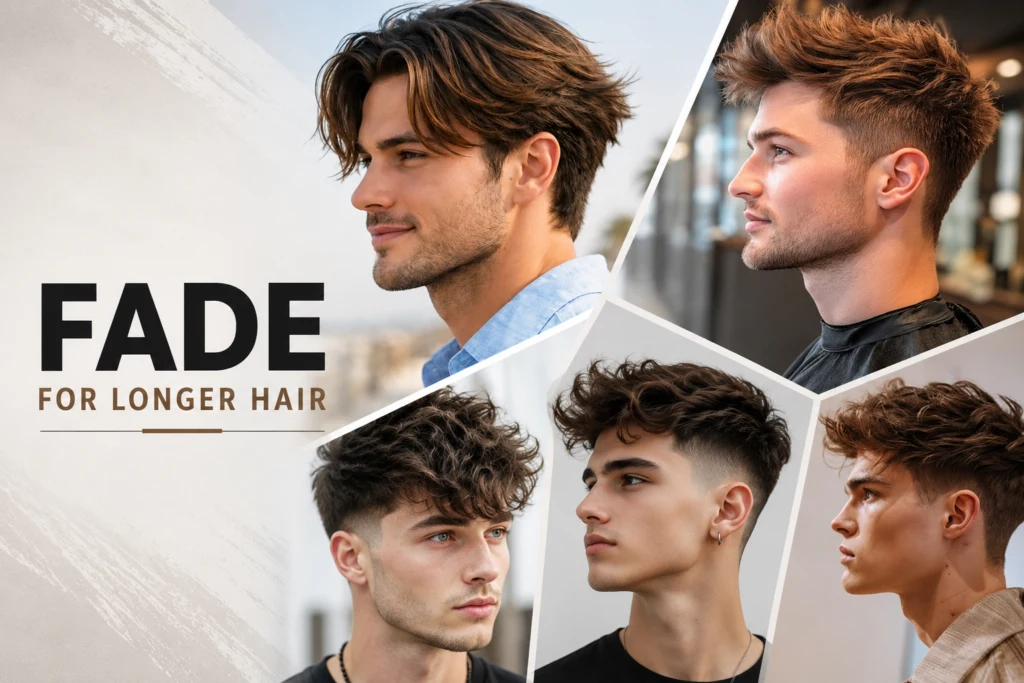
» Fade For Longer Hair: The Fashion Edit
Most people assume a fade means short hair everywhere. That is not true. A fade for longer hair keeps serious length on top while the sides stay tight and clean.
This combo is huge right now. Think slicked-back waves, a loose curly top, or a soft side part with volume. The longer top hair gives you room to experiment with texture and movement. The fade underneath keeps everything grounded and neat.
If your hair is naturally curly or coily, ask for a low or mid blend. It lets your curls stay the focus while the sides stay controlled. If your hair is straight or wavy, a high fade will show off your length with more drama.
Styling products matter here. A light clay or cream gives natural movement. A stronger pomade gives sleek, glossy control. Choose based on the mood you want.
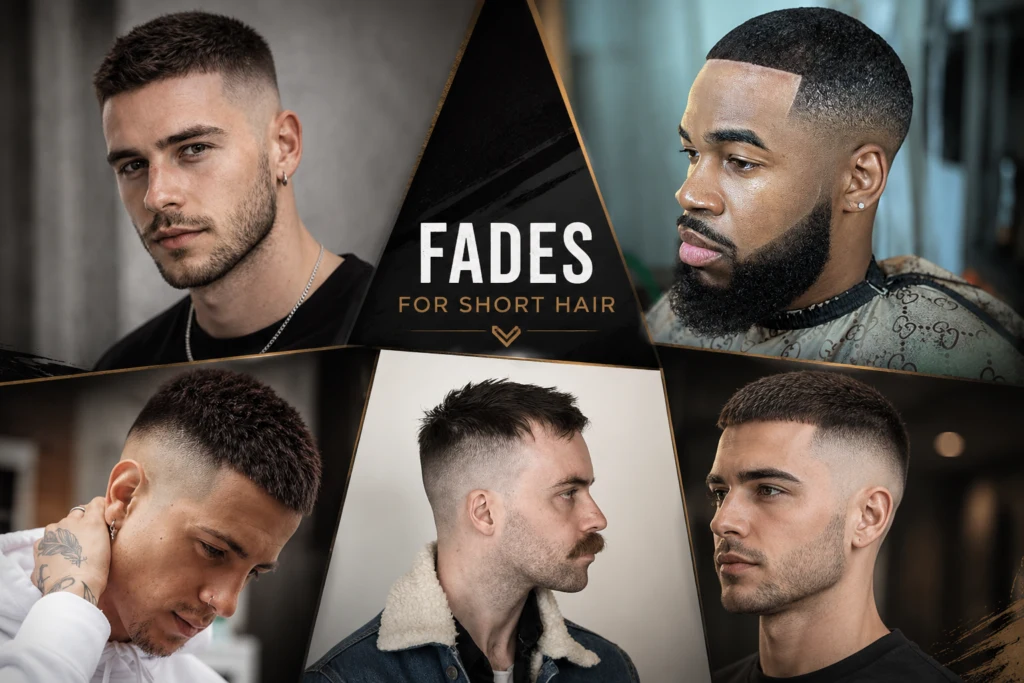
» Short Haircuts Fades For Minimal Style Lovers
Not everyone wants length on top. Short haircuts fades are perfect for guys who want something clean and low effort.
A crop fade pairs short, textured top hair with a tight blend on the sides. It suits almost every face shape. A buzz fade goes even shorter, keeping the whole head close-cropped with just a hint of fade detail. Both options are easy to maintain and travel well, which matters if you are always on the move.
This is a great choice for anyone who wants a fade that photographs well from every angle. There is no styling required, just a quick towel dry and you are done.
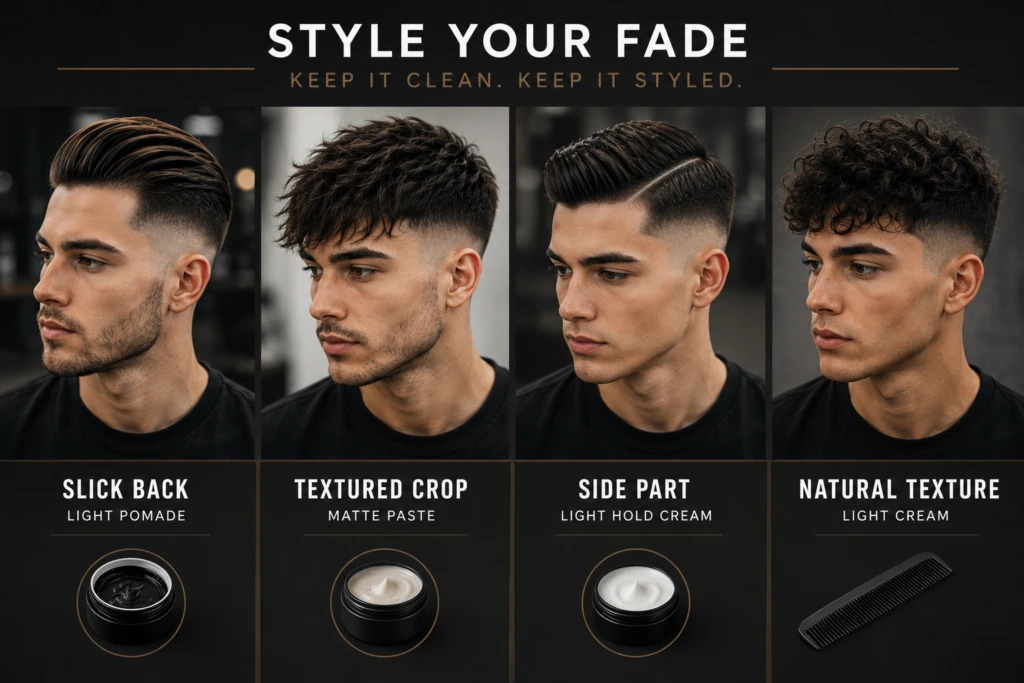
» How To Style A Fade Like A Fashion Editor
The fade itself does most of the visual work. Your job is to style the top with intention.
• Slick back. Apply a light pomade to damp hair and comb it straight back. Clean, polished, and works with almost every outfit.
• Textured crop. Use a matte paste and scrunch it through with your fingers. This gives a piece-y, undone look that feels current.
• Side part. A defined line, a light hold cream, and a comb. This is the most polished option for formal settings.
• Natural texture. Towel dry, add a small amount of light cream, and let your hair fall as it wants. This works beautifully with curls and waves.
• Brushed forward. Brush shorter top hair forward and slightly up for a clean, modern look. This reads especially sharp with a mid or high fade.
• Pompadour. Blow-dry the top upward and back for volume, then set it with a stronger pomade. This is a bigger, statement style, and it works with any fade height.
Whatever you choose, remember that a good fade does not need heavy styling. The clean sides already give your look structure.
» Match Your Fade To Your Style Aesthetic
This is the part no barbershop guide ever talks about, but it changes everything. Your fade should match the clothes you actually wear, not just your face shape.
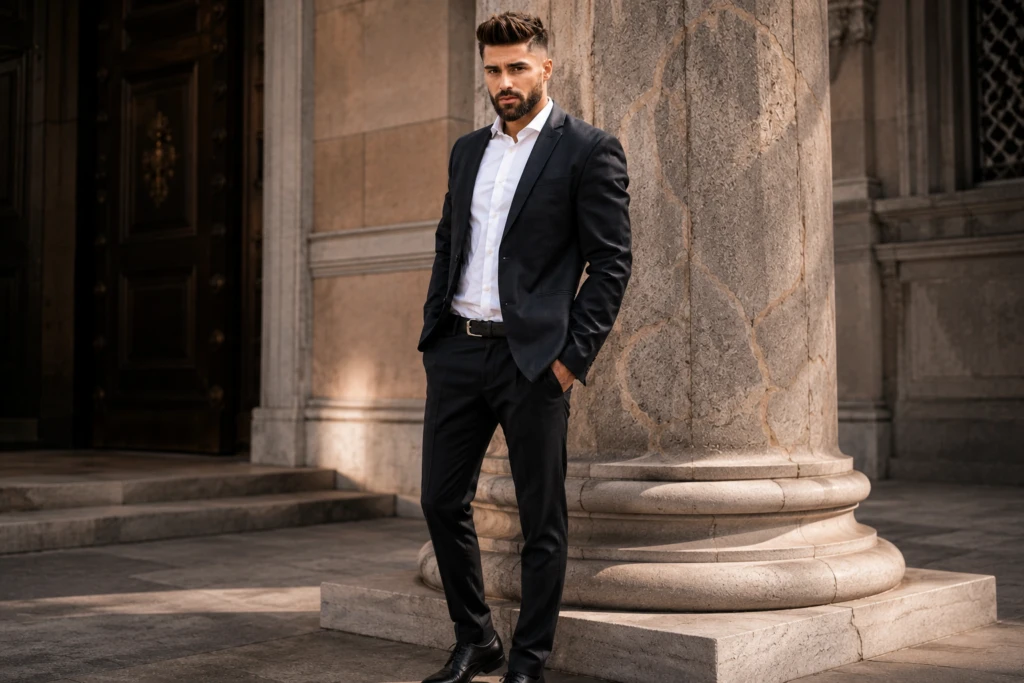
Streetwear guys usually look best in a high fade with a longer, textured top. It has enough edge to hold its own against baggy fits and heavy layering. Minimalist dressers, the ones who live in monochrome and clean tailoring, tend to suit a low fade with a slick back or side part. It stays quiet and lets the outfit speak.
If you lean classic and tailored, a taper fade reads timeless next to a blazer or a suit. And if your wardrobe is bold, layered, or a little avant-garde, a skin fade with one sharp design line or a shape-up gives your cut the same edge as your clothes.
Think of the fade as an accessory, not just a haircut. It should agree with the rest of your outfit, not fight it.
» Fade Meets Beard For A Complete Look
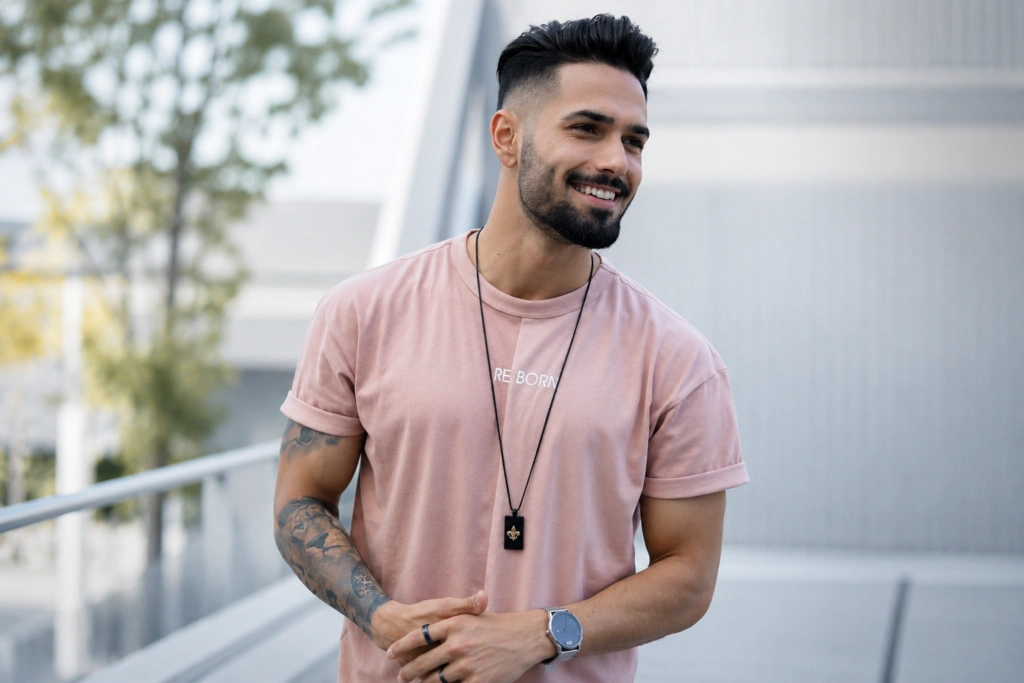
Most guides stop at the head. But if you have facial hair, a fade that ends abruptly at the jaw looks unfinished. A connected fade-to-beard blend fixes that.
Ask your barber to bring the side fade straight down into the beard, with no hard line at the sideburn. The beard itself can taper too, staying fuller at the chin and fading out along the cheek line. This creates one continuous shape from hairline to jaw, instead of two separate grooming decisions.
This blend works with any fade height, but it looks sharpest with a low or mid fade, since the transition into the beard stays smooth and gradual. If you are clean-shaven, none of this applies to you, and that is fine too. A crisp fade looks complete on its own.
» Choosing A Fade By Face Shape And Texture
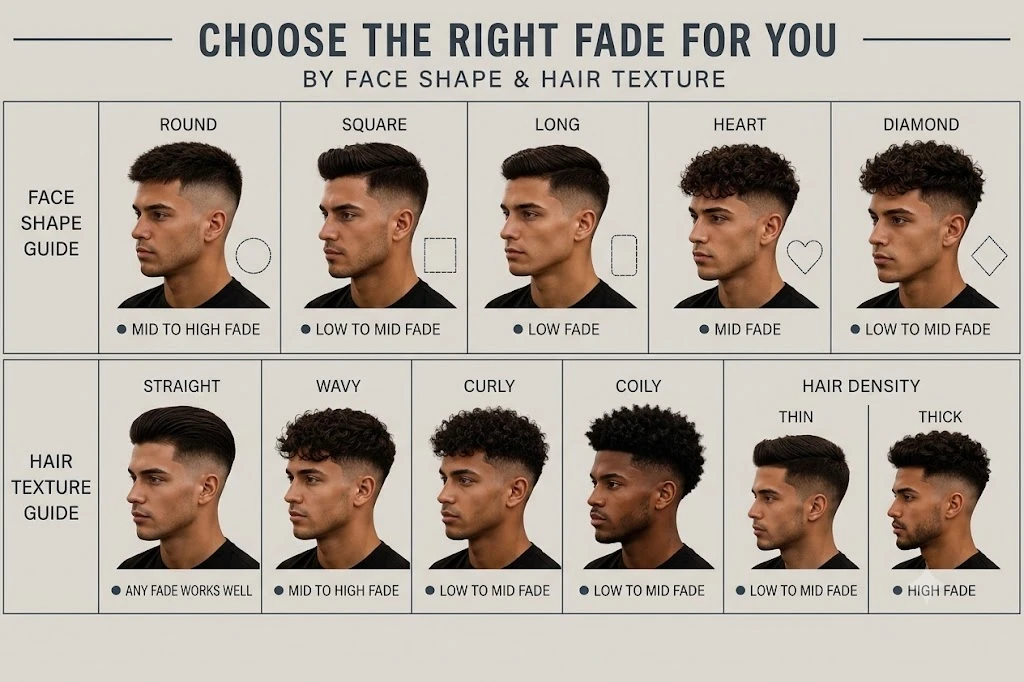
Face shape matters more than people think. A round face benefits from a mid or high fade, since it adds visual height. A square face looks sharp with a low or mid fade that softens the jawline. Long faces do well with a low fade, since it avoids adding extra height. Heart-shaped faces look balanced with a mid fade, since it draws attention away from a wider forehead. Diamond faces suit a low or mid fade, especially with a little extra volume left on top.
Hair texture matters too, and so does hair density, which most guides skip. Straight hair shows off crisp lines, so any fade works well. Wavy hair looks great with a mid to high fade for contrast. Curly and coily hair usually looks best with a low to mid fade, letting the curls on top stand out as the main feature. If your hair is thin, a low or mid fade adds the illusion of fullness through contrast. But if its thick, a high fade gives that volume somewhere to show off.
If you are unsure, bring reference photos to your barber. A picture removes all the guesswork.
» Salon Or DIY: Getting A Good Fade
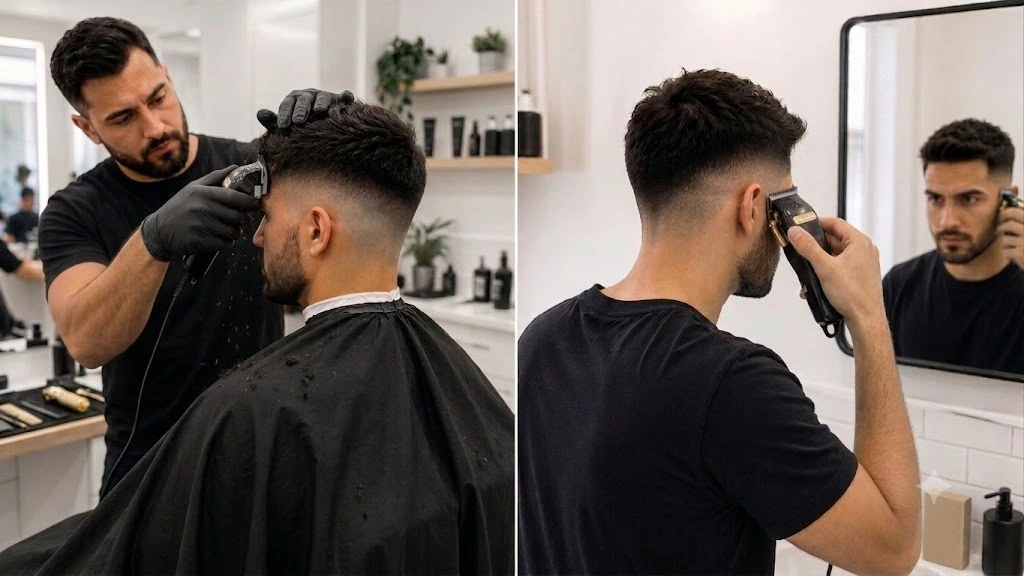
A fade haircut takes real skill. Blending guard sizes without leaving visible lines is not easy. For your first few tries, a professional barber is the safer bet.
If you want to try it yourself, start with clipper guards, a mirror, and patience. Cut the sides first with a longer guard, then switch to shorter guards to build the blend line by line. Work slowly. You can always take more hair off, but you cannot put it back.
Whether you go to a barber or try it at home, communication is everything. Tell your barber the fade height you want, how short you want the sides, and how much length to leave on top. That level of detail is the difference between an okay cut and a genuinely good fade.
» What A Great Fade Really Costs
Prices vary a lot depending on where you go. A basic chain salon may charge less, but the blend often comes out less precise. A skilled barber who specializes in fades usually charges more, and it shows in the finish. Think of it as an investment in the one detail that frames your whole face, every single day.
If budget is tight, book with a barber-in-training at a good shop. You still get careful blending, just at a lower price while they build their skill.
» Caring For Your Fade Between Cuts
A fade looks sharpest in the first week, then slowly softens as it grows out. Wash your hair every two to three days, not daily, to avoid stripping natural oils. A light, water-based product keeps the top manageable without weighing it down. Trim any flyaways at the neckline yourself if your next appointment is still a week or two away. Small habits like these keep your cut looking fresh for longer.
High and skin fades leave more scalp exposed, so add sunscreen or a hat on long days outside. It is an easy step people forget. And once you land a fade you genuinely love, snap a photo right after the cut. Bring that photo to your next appointment. It keeps every future fade haircut consistent, instead of leaving it to memory.
» What To Tell Your Barber
Most bad fades come down to a bad conversation, not a bad barber. Walk in with these four details ready, and you remove almost all the guesswork.
Say the fade height you want: low, mid, or high. Say how short you want the sides to finish: skin, or a short guard number. How much length to leave on top, in inches if you can. And say which top style you want, so the barber can shape it to match. That is the entire script. It works in any barbershop, anywhere in the world.
» Common Fade Mistakes Fashion Guys Make
Even stylish guys get this wrong sometimes. Watch out for these slip-ups.
Waiting too long between visits. A fade grows out fast, especially skin fades and high fades. Two to three weeks is the usual window before it needs a refresh.
Skipping the consultation. Walking in and saying “just do a fade” leaves too much room for error. Always specify the type and height.
Over-styling the top. A fade already gives you structure. Piling on product can make the whole look feel heavy instead of sharp.
Ignoring your face shape. The wrong fade height can throw off your proportions. A quick chat with your barber avoids this completely.
» FAQs
1. How often should I get my fade haircut redone?
Every two to three weeks works for most fade types. Skin fades and high fades grow out faster, so those may need touch-ups closer to the one to two week mark.
2. Can I get a fade with curly or coily hair?
Yes. Fades work beautifully with curly and coily textures. A low or mid blend usually works best, since it lets your natural curl pattern stay the focus on top.
3. What is the difference between a taper and a fade?
A taper shortens hair gradually but stops at a short length. A fade goes further, blending all the way down to the skin or very close to it. Fades read as bolder and more modern.
4. Is a fade haircut suitable for the office?
Absolutely. A low fade or taper fade looks polished and professional. Keep the top length modest and the blend subtle for the most workplace-friendly result.
» Conclusion
A fade haircut is one of the most versatile choices in men’s grooming right now. It works with short hair, long hair, curls, waves, and every face shape you can think of. Pick your fade type, talk to your barber with confidence, and let your top style do the rest.
That is exactly the kind of practical, style-first advice you will always find on Style Sola. We believe good style starts with the details, and a well-cut fade is one detail that never goes out of fashion.